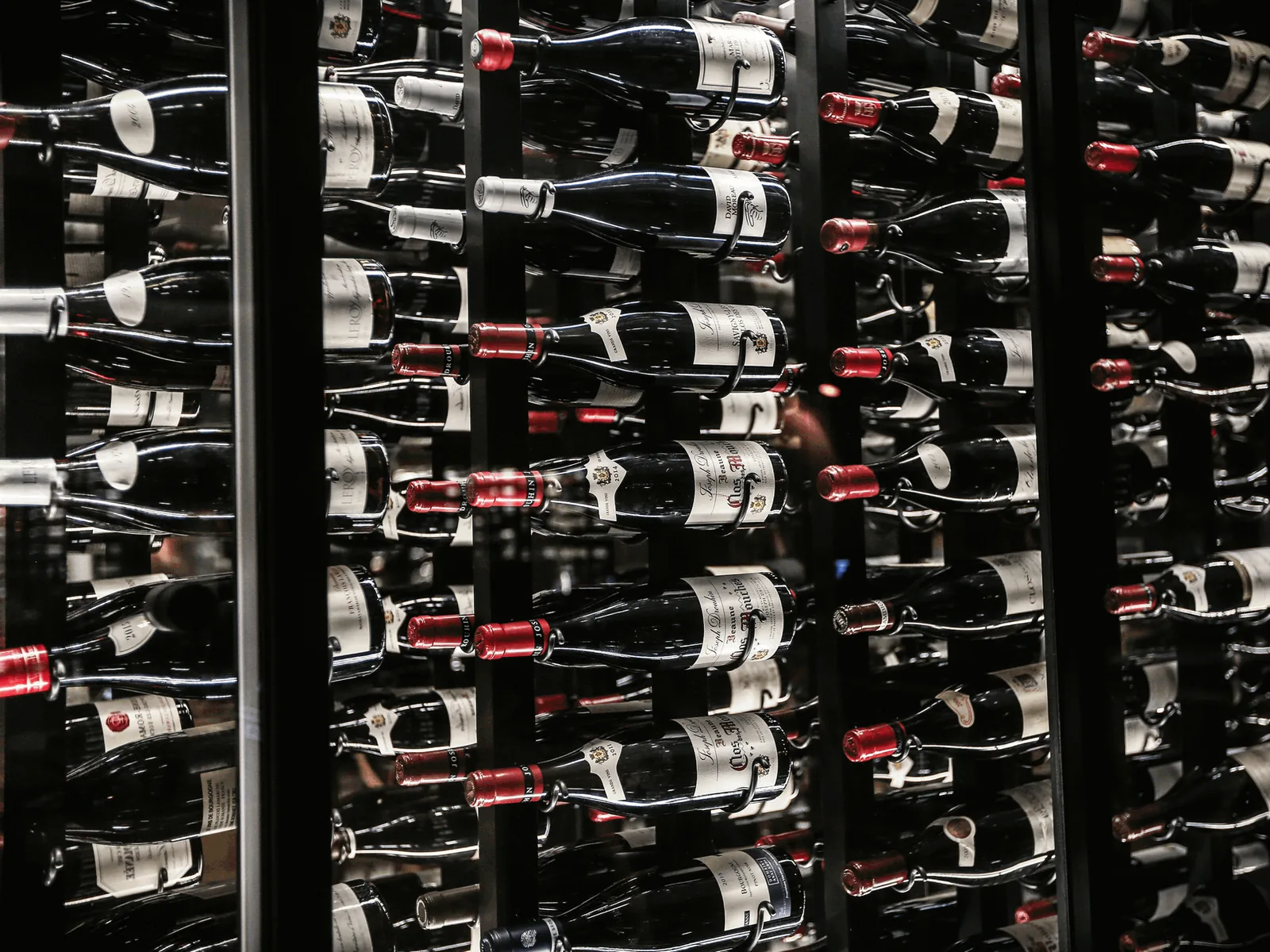
A wine cellar should hold about 55 degrees Fahrenheit and 50 to 70 percent relative humidity. Within those bands, the exact number matters less than stability: a cellar that sits steadily at 58 degrees is a better home for wine than one that swings between 52 and 62 every afternoon. This guide covers where those numbers come from, what each one protects, and the specific reasons cellars in Southwest Florida drift away from them.
Why 55 degrees became the standard
The number comes from the underground caves of Europe's traditional wine regions, which hold a naturally stable temperature in the mid-50s year round. Wine matured well there for centuries, and when refrigeration made it possible to recreate those conditions anywhere, the cave became the specification.
The chemistry backs up the tradition. Wine ages through slow chemical reactions, and temperature sets their speed. Colder than the mid-40s, aging nearly stops and a wine you planned to drink in ten years stays closed far longer. Warmer, and the reactions accelerate: a cellar in the high 60s or 70s pushes wine through its development years ahead of schedule and flattens the aromatics along the way. Sustained heat above roughly 75 degrees starts doing outright damage, producing the stewed, flat character of cooked wine. Fifty-five sits in the slow, graceful middle, and anything stable between about 45 and 65 is serviceable storage.
Stability matters more than the setpoint
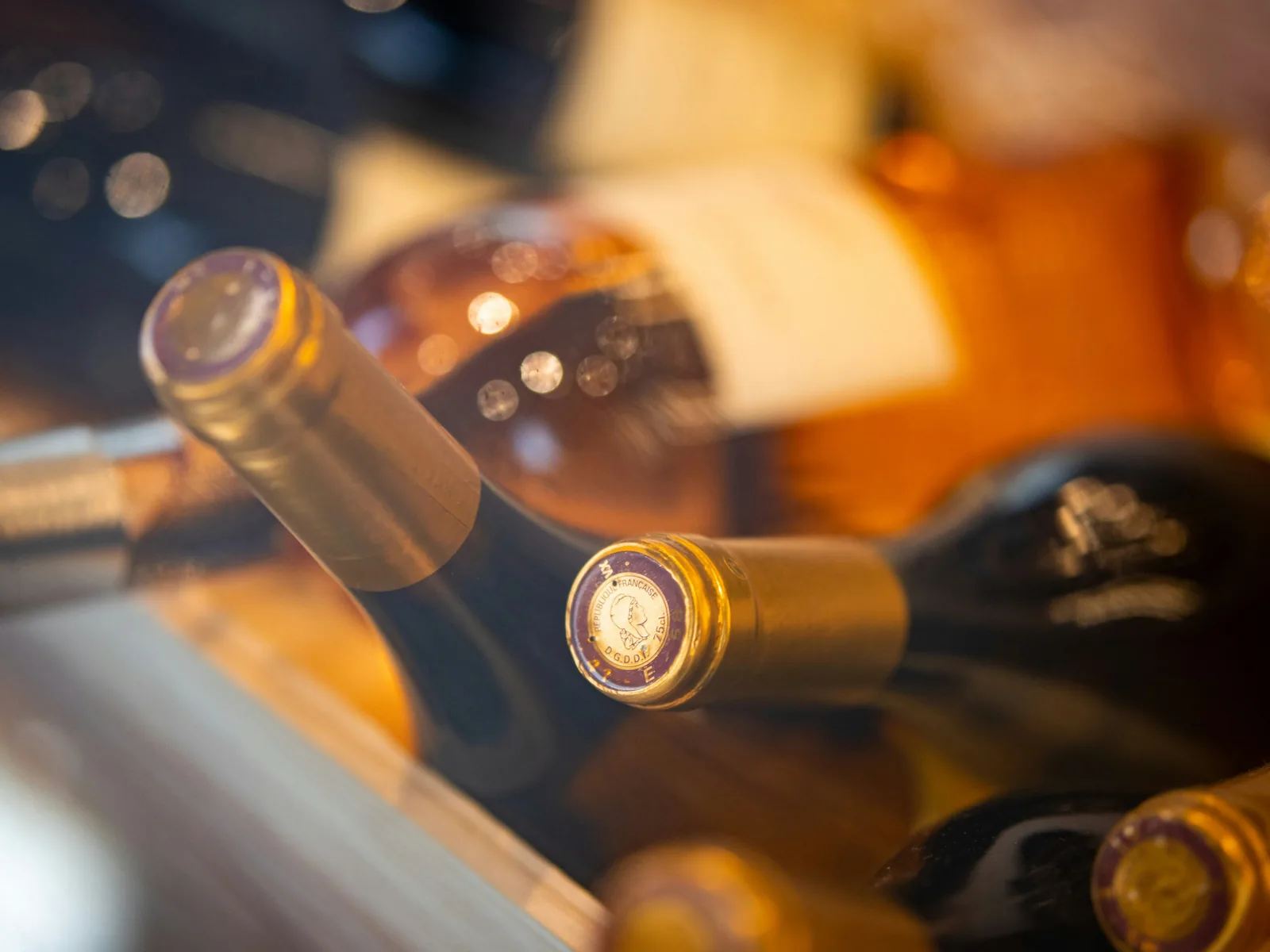
Temperature swings hurt wine mechanically, not just chemically. Wine expands as it warms and contracts as it cools, and repeated cycles work the liquid against the cork like a slow pump. Over months, that pressure cycling can push wine past the cork, pull air in behind it, and break the seal that keeps oxygen out. Seepage around the capsule and pushed corks in a cellar are classic signs of temperature cycling, not just of one hot event.
Daily swings of a degree or two are normal cooling-system behavior. Swings of five degrees or more on a daily rhythm mean the room or the cooling unit has a problem worth finding.
Humidity: what the 50 to 70 percent window protects
Humidity management is about the corks first. In air that is too dry, over long periods, the exposed end of a natural cork dries and shrinks, and a shrunken cork lets oxygen trickle into the bottle. Keeping the cellar air in the 50 to 70 percent band, with many builders targeting around 60, keeps corks sound for decades.
The top of the band guards against the opposite failure. Sustained humidity above the 70s grows mold on walls, racking and labels, and ruins the labels that carry much of a collectible bottle's value. High humidity in a cellar also tends to mean condensation somewhere, and chronic condensation inside a wall assembly quietly rots the room around the collection.
Why cellars drift in Southwest Florida
A wine cellar in Venice or Sarasota is a 55-degree room sitting inside a climate that spends half the year at 90 degrees and tropical humidity. The margin for error is small, and several things erode it:
- Heat load the room was not built for. A glass-fronted cellar off a warm hallway, recessed lighting, or an uninsulated interior wall all add load. A cooling unit sized for the showroom drawing may run flat out in August and still lose ground.
- Vapor barrier and insulation gaps. A proper cellar is built like a cooler, with a sealed vapor barrier. Gaps let humid Florida air migrate into the walls, where it condenses, feeds mold and adds latent load the cooling unit must remove.
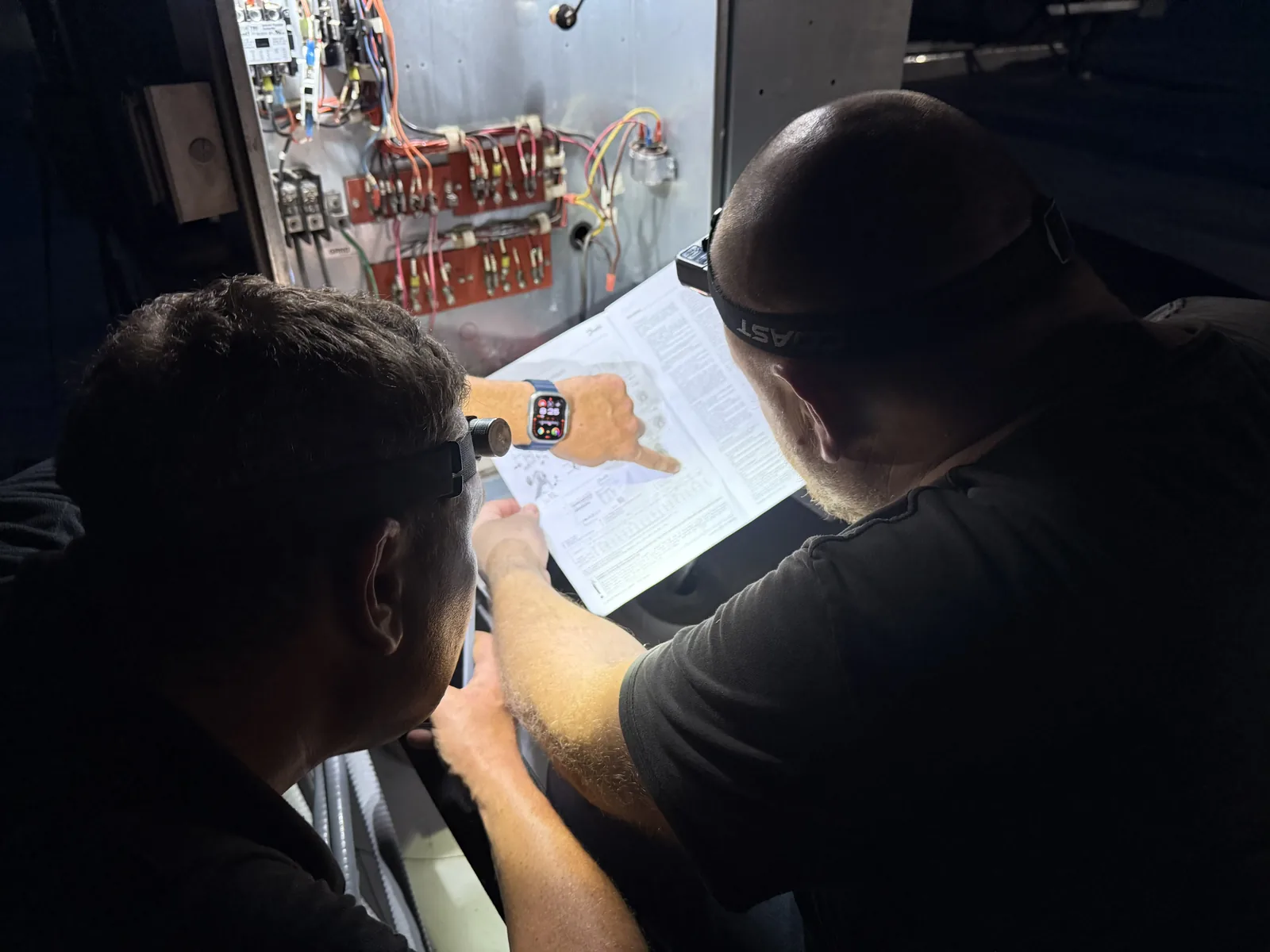
- Dirty coils and blocked airflow. Cellar cooling units are small refrigeration systems, and like any of them they lose capacity as condenser coils clog and filters load up.
- Refrigerant loss. A slow leak shows up as a cellar that creeps a degree or two warmer each month and a unit that runs longer to get there.
- Door seals and traffic. A cellar door that does not latch, or gets opened constantly, imports heat and humidity with every swing.
Quick reference: the numbers at a glance
- Target temperature: about 55 degrees Fahrenheit for long-term storage and aging.
- Acceptable range: roughly 45 to 65 degrees, provided it is stable.
- Daily swing: a degree or two is normal; five or more is a problem worth diagnosing.
- Relative humidity: 50 to 70 percent, with around 60 a common target.
- Service temperatures are different: whites are poured colder and reds slightly warmer than cellar temperature. The cellar stores; the fridge upstairs serves.
How to monitor without obsessing
Put an inexpensive logging thermometer-hygrometer in the racking at bottle height, away from the cooling unit's supply air, and glance at the history weekly. The history is the point: a single reading tells you almost nothing, while a week's graph shows the swings, the recovery after door openings, and the slow drift that means trouble. If the display on the cooling unit disagrees with an independent sensor by more than a couple of degrees, trust the independent sensor and have the unit checked.
When drift means the cooling unit is failing
Call for service when the cellar runs warm and stays warm, when daily swings widen for no seasonal reason, when humidity pins high and condensation appears on glass or walls, or when the unit ices up, short-cycles or runs continuously. Doctor Fridge services wine cellar cooling units in Sarasota, Lakewood Ranch, Siesta Key, Longboat Key and Venice homes, on all makes and models, repair first. The residential wine service call is $150, and the diagnosis comes with an honest answer about whether the unit, the room or the setpoint is the real problem. Our wine cooling services page covers cellars, wine rooms and built-in coolers. Florida license CAC1815692.