Most residential AC repairs come down to a short list of parts: a failed capacitor, a burned contactor, a seized fan motor, a clogged condensate drain, a tripped float switch, or a refrigerant leak. The symptoms overlap, so a home that is not cooling could be any of them, but the diagnosis follows a logical order. This guide explains what actually fails on a typical air conditioner, how a technician narrows it down, and which checks you can safely do yourself before you pick up the phone.
The quick checks worth doing first
A fair number of no-cooling calls end without a repair, so rule out the free fixes before anything else. None of these require tools or opening the equipment.
- Thermostat: set to cool, setpoint below room temperature, and fresh batteries if it uses them.
- Air filter: a filter choked with dust starves the system for air and can freeze the indoor coil. Replace it if it is dirty.
- Breakers: check the panel. An AC that trips its breaker again immediately after a reset has a real fault, so leave it off and call.
- Condensate drain: if the indoor unit shut off and there is water near it, a clogged drain and a safety float switch may have stopped the system on purpose.
- Outdoor unit: clear leaves and grass clippings off the condenser and confirm the fan on top is spinning when the system calls for cooling.
The parts that fail most often
When it is a genuine component failure, a handful of parts account for the majority of repairs, and in Florida's heat and humidity they fail more often than they would up north.
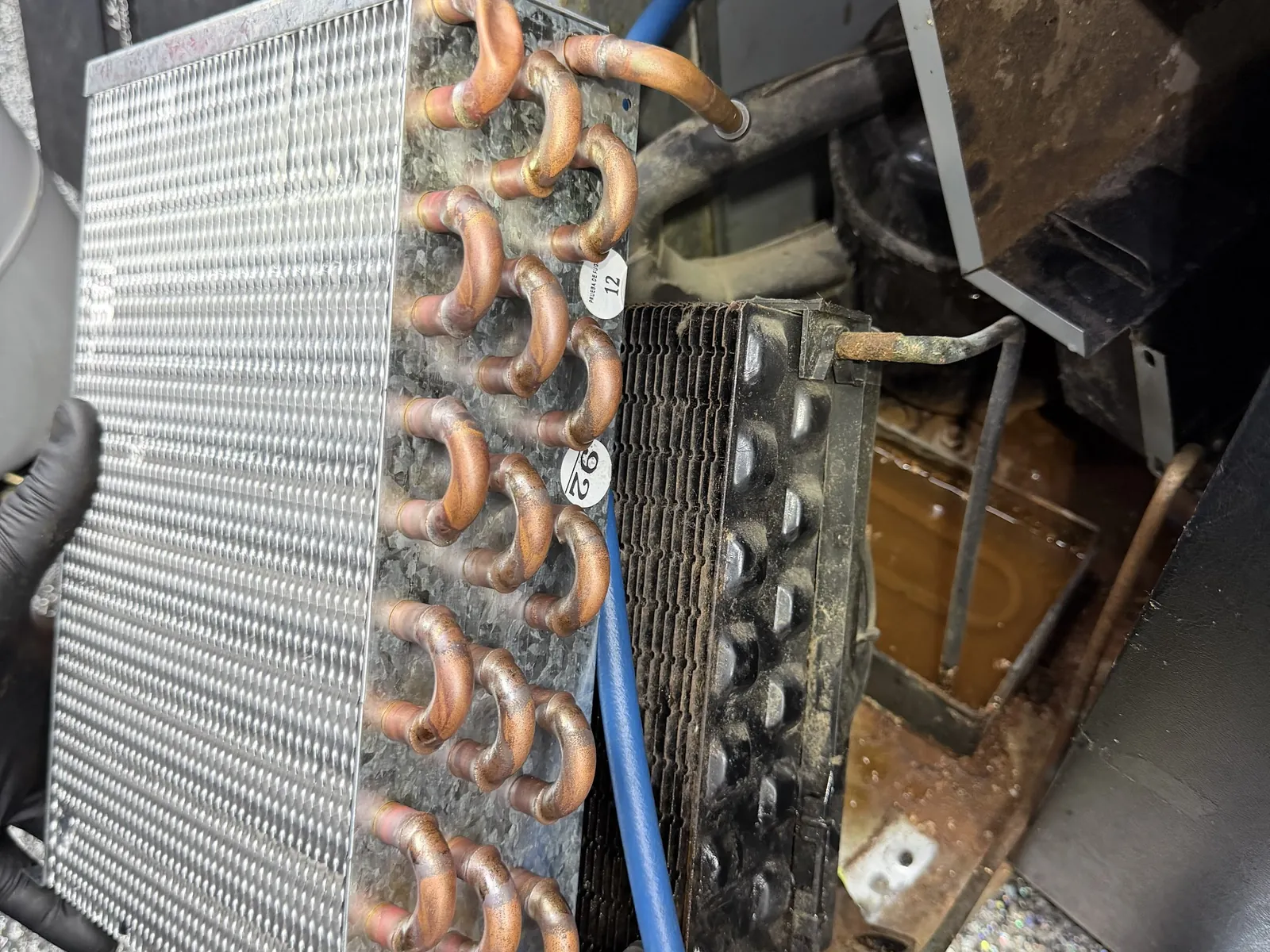
Capacitors store the jolt that starts the compressor and the fan motors. They are the single most common AC repair, they degrade faster in extreme heat, and a failed one shows up as a humming unit that will not start or an outdoor fan that will not spin. Contactors are the electrical switch that powers the outdoor unit; their contacts pit and burn over time, and ants are drawn to them and short them out. Fan motors, both the outdoor condenser fan and the indoor blower, wear out their bearings and stall, which causes overheating and shutdowns.
The condensate drain clogs with algae in a humid climate and either backs up or trips the float switch. The refrigerant charge only drops if there is a leak, because a sealed system does not consume refrigerant; low charge means a leak somewhere in the coil, line set or fittings. The thermostat itself occasionally fails or loses its connection to the equipment.
How a technician diagnoses it
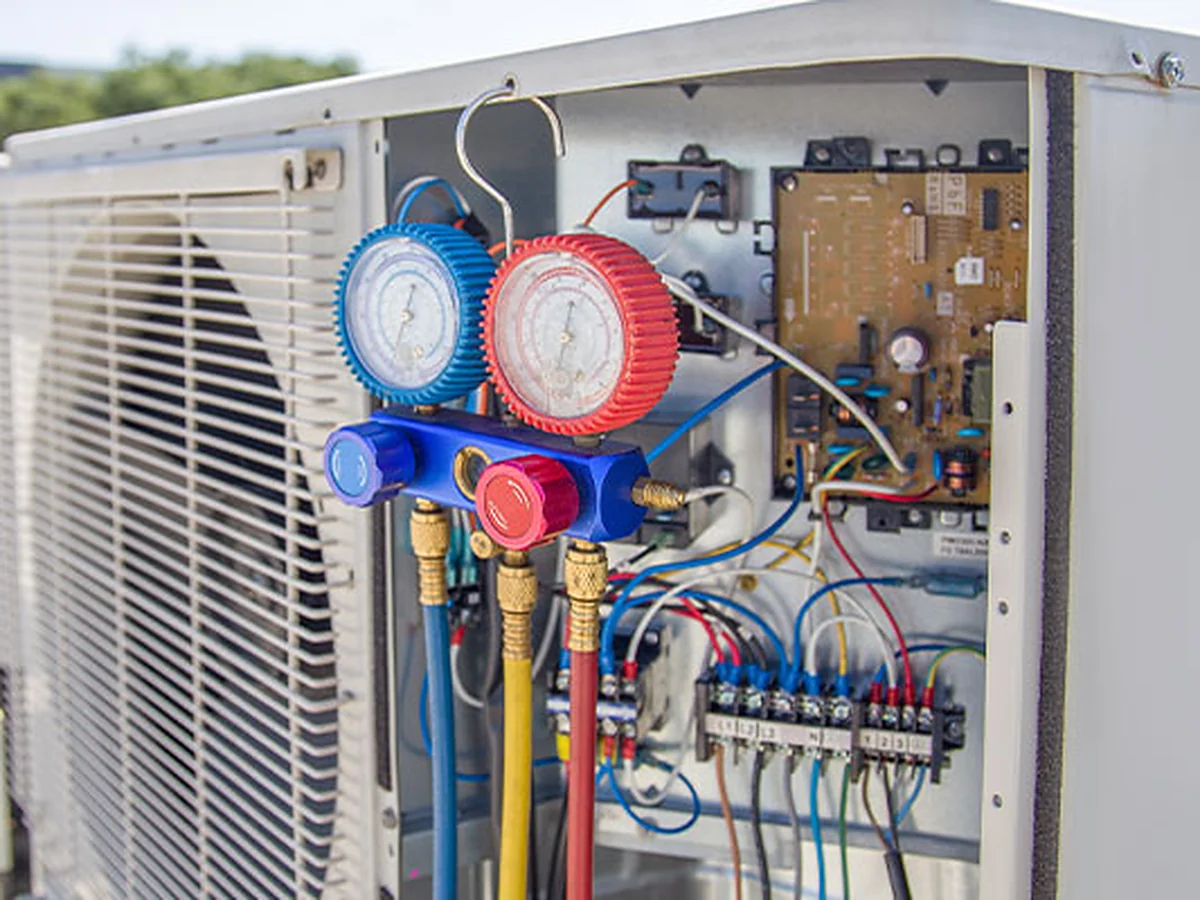
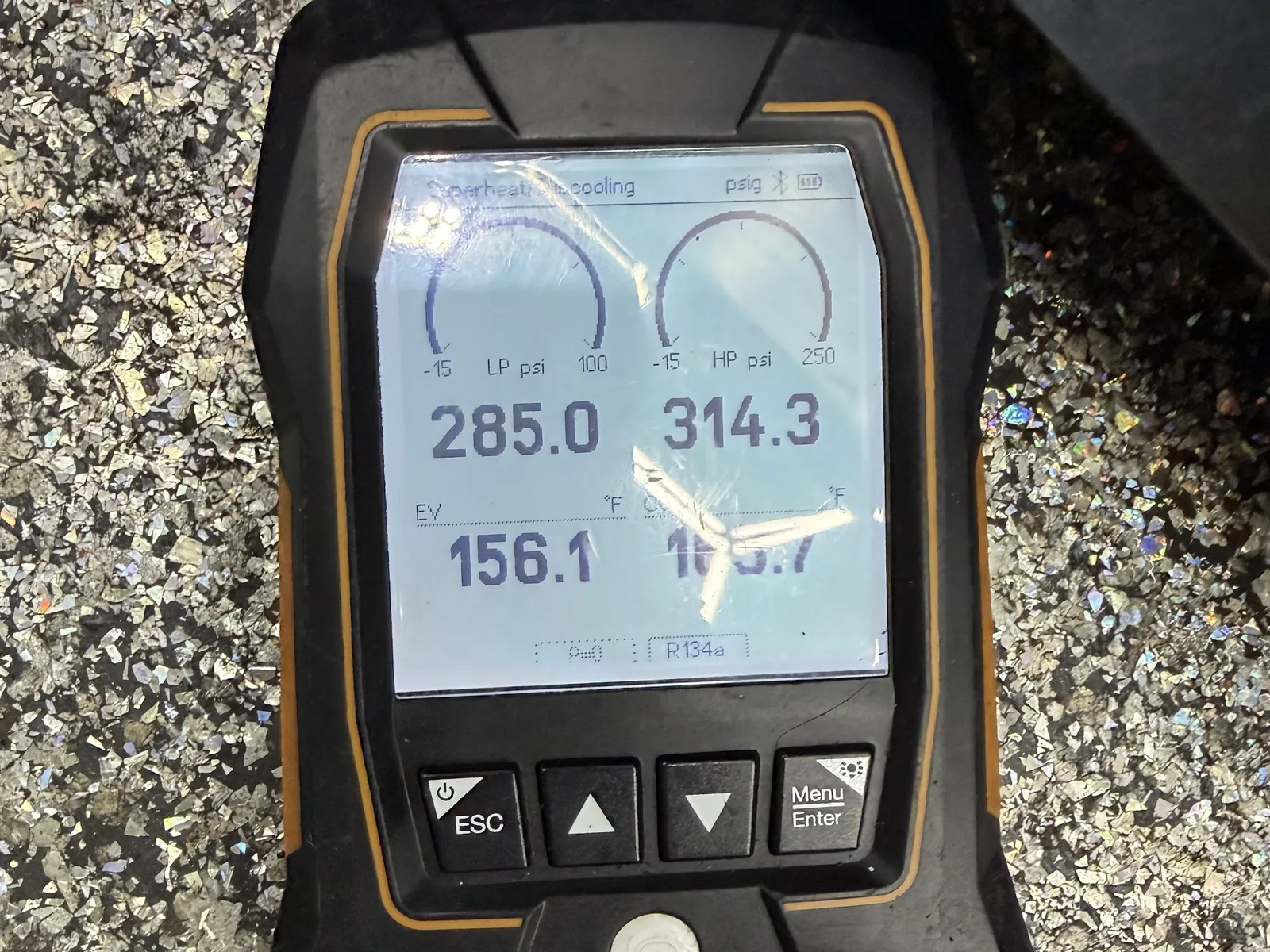
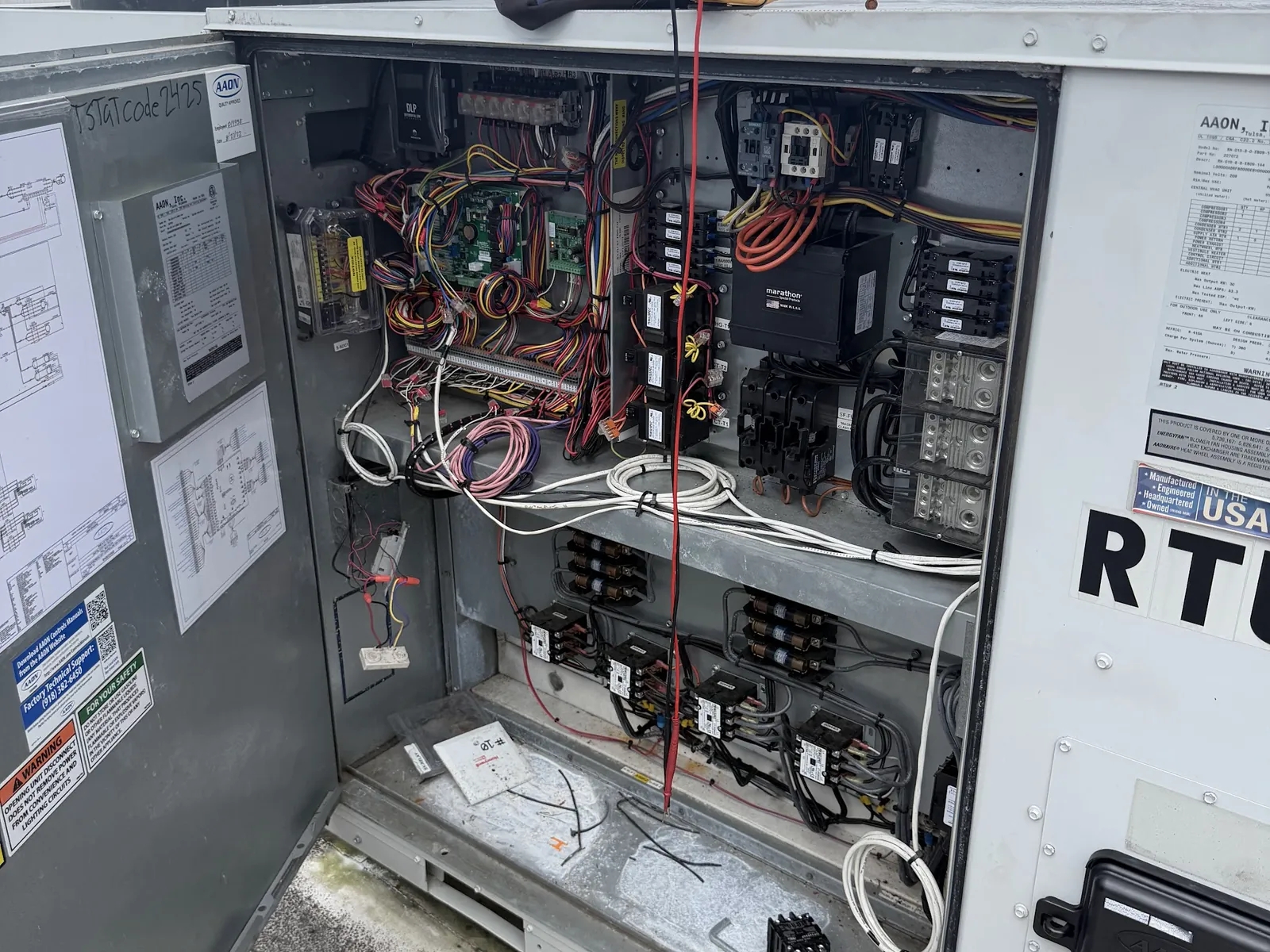
A good diagnosis is not guesswork and parts-swapping. It starts at the thermostat and the air filter, moves to the electrical side with a meter to read voltage and test the capacitor and contactor, and checks the amperage the motors are drawing against their rating. If the electrical side is healthy, the tech puts gauges on the system to read the refrigerant pressures and takes superheat and subcooling measurements, which separate a low charge from an airflow problem from a failing compressor.
That order matters, because the same symptom of weak cooling can come from a dirty coil, a low charge or a restricted metering device, and only the readings tell them apart. A shop that reaches for a refrigerant top-off on every warm-air call is treating a symptom and ignoring the leak underneath it.
Frozen coils and water leaks
Two of the most alarming-looking problems have mundane causes. A block of ice on the indoor coil or the refrigerant line almost always means restricted airflow (a dirty filter, a failing blower or closed vents) or a low refrigerant charge. The fix is to shut the system off, run the fan only to thaw it, and address the real cause; running a frozen system hard can slug the compressor with liquid and turn a cheap repair into an expensive one.
Water pooling by the indoor unit is usually that clogged condensate drain rather than a refrigerant issue. The drain can be cleared, and a properly installed system has a float switch that cuts cooling before the water reaches your ceiling.
Why Florida is hard on these parts
The reason this short list of parts fails so often here is the environment. Capacitors are rated for heat but degrade faster the hotter they run, and a condenser baking in full Florida sun runs hot all summer. The humidity that makes the air feel heavy also feeds the algae that clogs condensate drains. Salt air near the coast corrodes contactor contacts and eats at coils and electrical terminals. And the afternoon thunderstorms bring lightning and grid surges that take out control boards and, in a bad hit, compressors. None of that changes the repair itself, but it explains why the same handful of parts keep coming up year after year.
Repair or replace?
Nearly all of these repairs are worth doing. Capacitors, contactors, motors, drains and most leaks are straightforward fixes on a system with years left in it. Replacement only earns its place when the compressor fails on an old unit, when the system still uses phased-out R-22, or when repairs are stacking up on equipment past its useful life. We walk through that decision honestly in our guide on when replacement makes sense.
When to call
Call when the quick checks do not restore cooling, when the breaker trips repeatedly, when you see ice on the system, or when it is simply too hot to wait. Doctor Fridge handles residential AC repair and after-hours emergency AC repair across Sarasota, Manatee and Charlotte counties, with same-day service available for homes in Venice and the surrounding area. The residential service call is $120, it covers the trip and a full diagnosis, and the repair is quoted before any work begins. Florida license CAC1815692.