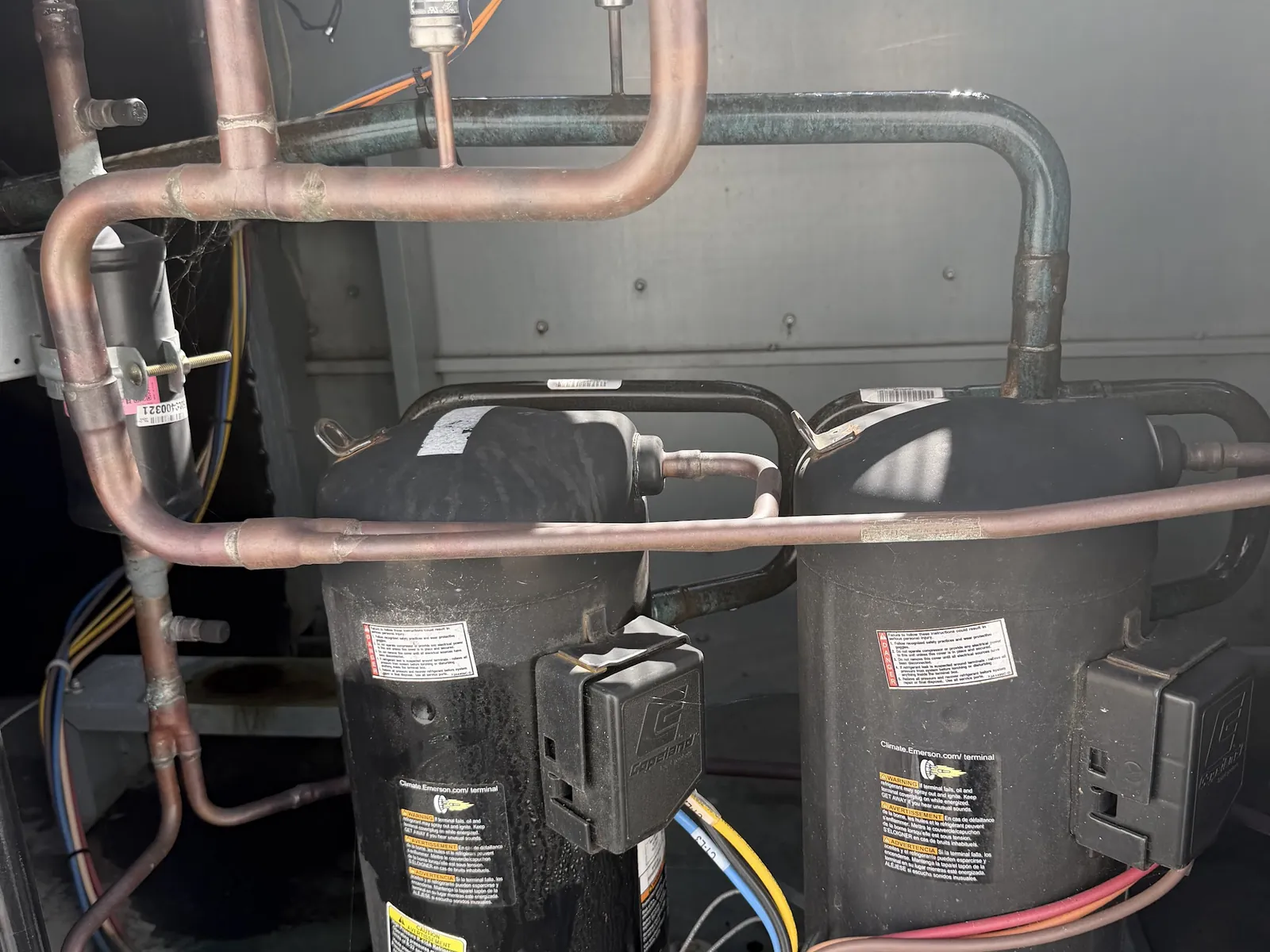
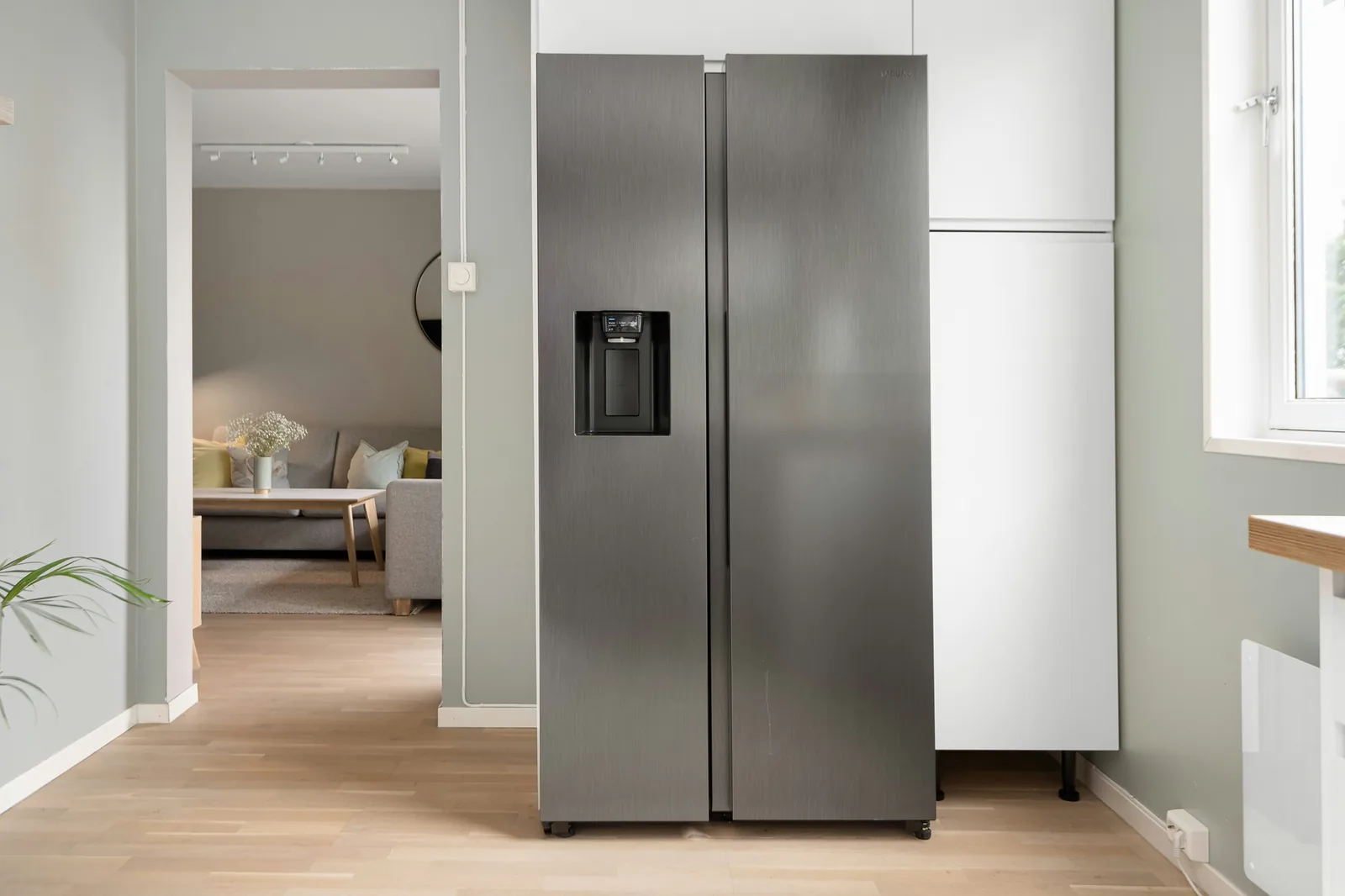
Before you call anyone about a refrigerator that has gone warm, there are four checks that take about ten minutes and resolve a real share of calls on the spot. A refrigerator is a simple machine at heart: a compressor pushes refrigerant through coils that absorb heat inside and release it outside, and a fan or two move the cold air where it needs to go. Most of what goes wrong is airflow, dirt or a setting, not a dead compressor. This guide, written from our Venice home base, covers what a homeowner can safely check and fix, and the exact point where it becomes a technician's job.
Start with the four fast checks
- Thermostat and controls: confirm nothing got bumped. Fridge should sit around 37 to 40 degrees, freezer at 0. A dial knocked to a warmer setting is a real cause.
- Airflow inside: an overpacked fridge, or boxes shoved against the rear vents, blocks the cold air from circulating and creates warm spots. Clear the vents.
- Door seals: feel for cold air escaping and check for a torn or dirty gasket. Close the door on a dollar bill; if it slides out freely, the seal is leaking there.
- Condenser coils: the coils behind or beneath the fridge collect dust, pet hair and, in Florida, humidity-caked grime. A matted coil cannot shed heat, so the fridge runs hot and cools poorly.
Those four cover a large fraction of warm-fridge complaints, and all four are free to check. The coil cleaning in particular is the single most valuable thing most people never do.
Clean the condenser coils the right way
Unplug the refrigerator first. Find the coils, usually behind a kick panel at the bottom front or exposed across the back, and clear them with a coil brush and a vacuum. In a Venice kitchen, between humidity and pets, these pack up faster than people expect, and a choked coil forces the compressor to run long and hot, which both wastes energy and shortens the compressor's life. Do this a couple of times a year and you prevent a meaningful share of "not cooling" calls before they happen.
Fridge warm, freezer fine
If the freezer is cold but the fridge above it is warm, the problem is almost never the compressor, which is good news. On most modern refrigerators the fresh-food section is cooled by air blown over from the freezer, so if that path is interrupted the fridge warms while the freezer stays cold. The usual causes are a frosted-over evaporator coil behind the freezer panel from a defrost fault, or a failed evaporator fan. Clearing a frosted coil by letting it thaw can restore things temporarily, but if frost returns the defrost system needs a proper look.
Water pooling inside or underneath
Water in the bottom of the fridge or on the floor usually means a clogged defrost drain. Meltwater from the automatic defrost cycle is supposed to run down a small drain to a pan near the compressor, where it evaporates. When that drain ices up or clogs, the water backs up instead. Thawing and flushing the drain is a doable homeowner fix. If your fridge has a plumbed water and ice line, also check the fittings and the inlet valve, because a slow drip there is a separate leak.
Get the temperatures and placement right
A lot of "not cold enough" complaints are really setup problems. Aim for about 37 to 40 degrees in the fresh-food section and 0 degrees in the freezer, and give a newly adjusted setting a full day to stabilize before judging it. Placement matters too, especially in a warm Florida garage or a sun-exposed kitchen: a refrigerator crammed against a wall, boxed in by cabinetry, or sitting next to an oven or a window has to work far harder to shed heat, and a garage fridge in July may be fighting ambient temperatures its thermostat was never designed for. Leaving breathing room and keeping it out of direct heat does more for cooling than people expect.
Humidity is the other Florida factor. Every time the door opens, humid air pours in, condenses and adds to the frost and drain load, so a fridge opened constantly in a hot kitchen naturally works harder and frosts faster. That is normal, not a fault, but it is a reason to keep the gaskets sealing well and the door closed.
Reading the noises
Refrigerators are not silent, and knowing normal from abnormal helps. A steady hum is the compressor running, which is fine. Occasional pops and crackles are the cabinet and defrost cycle, also fine. What is worth attention is a rapid clicking that repeats every few minutes with no cooling, which can mean the compressor is trying to start and failing on a bad start relay, or a loud new rattle or buzz. Those are signals to stop guessing and have it diagnosed.
A simple maintenance routine
Most refrigerator repairs are really prevented maintenance that never happened. Clean the coils twice a year, wipe and inspect the door gaskets, keep the vents inside clear, replace the water filter about every six months if the unit has one, and leave a few inches of breathing room behind and above the fridge. A surge protector is cheap insurance for the electronics against Florida's storm-season power events. None of it is difficult, and all of it extends the life of the appliance.
Pay extra attention to any second refrigerator living in the garage, which is common in Venice homes. A garage fridge contends with summer temperatures well above what its thermostat was designed around, so its coils need cleaning more often, it needs even more clearance for airflow, and it will run far longer cycles than the one in your air-conditioned kitchen. If a garage unit struggles specifically in the heat of summer and recovers in milder months, that is usually the environment, not a failing part, though it is also a reason those units tend to wear out sooner.
Where DIY stops
The homeowner line is clear: cleaning, clearing, settings and simple part checks are fair game. Anything involving the sealed refrigeration system, refrigerant, or the compressor is not, both because it requires EPA certification and specialized tools and because that is where a repair-versus-replace decision usually lives. If the fridge will not cool at all with clean coils and a running fan, if the compressor is hot and clicking on and off, or if you smell anything electrical, it is time to call rather than tinker.
Local help in Venice and beyond
When a fridge is past the DIY checks, Doctor Fridge provides refrigerator repair and full refrigeration service from our Venice base across Sarasota, Manatee and Charlotte counties, including Sarasota. The residential service call is $120, the diagnosis is honest, and the repair is quoted before any work begins. Why Venice homeowners call us: repair first, warranty-backed, and no push to replace a fridge that is worth fixing. Florida license CAC1815692.